Showing posts with label WWII History. Show all posts

Monday, 28 October 2013

The History Lesson

This post is less fun, but I felt it wouldn't be right to leave it out. Travel is about experiences, and this daytrip definitely fell under that category.

Pre-visit we are in high spirits!
Because we had only planned a few days in Germany, we had to get down to business right after our arrival in Munich. Our first stop was to visit an important historical site: the Dachau Concentration Camp Memorial. After we dropped our luggage off at our hostel we caught the metro to the quiet town where the site is located. It took a while for us to find the route to the Memorial from the terminal, but eventually we arrived and got ourselves some electronic audio guides (3.50 EURO). 
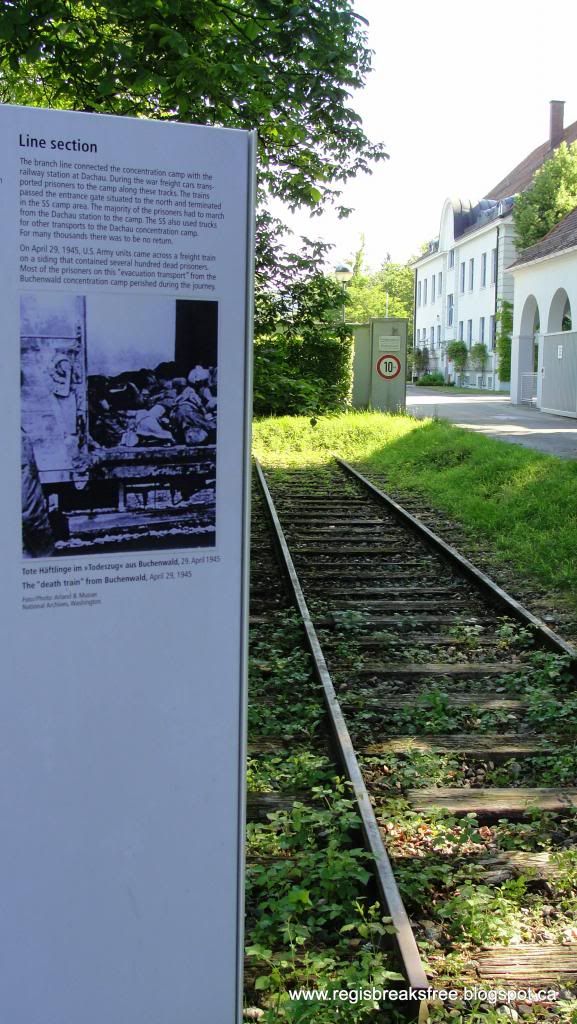
A little ways off from the memorial site you can see these tracks.
The trains that ran on them were used to bring prisoners into the concentration camp.
It was an absolutely stunning day weather-wise, and though the memorial was relatively busy with tourists, it was a very quiet and respectful atmosphere. I had difficulty reconciling my knowledge of its nightmarish past with the bright sunny day, where the birds chirped and a soft breeze rustled the leaves. It was a weird contrast to experience.
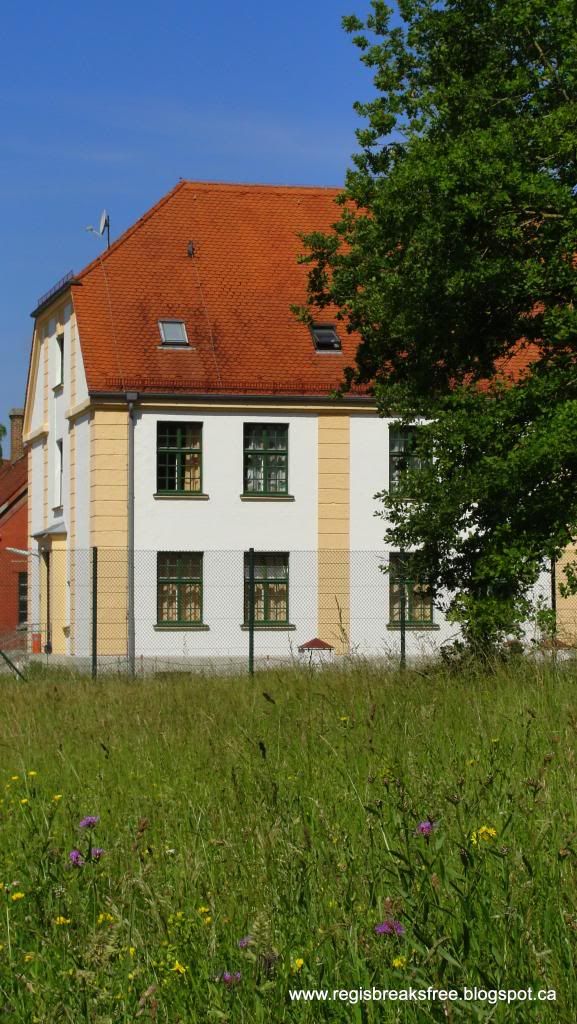
The officer's houses were not far from the work camp.
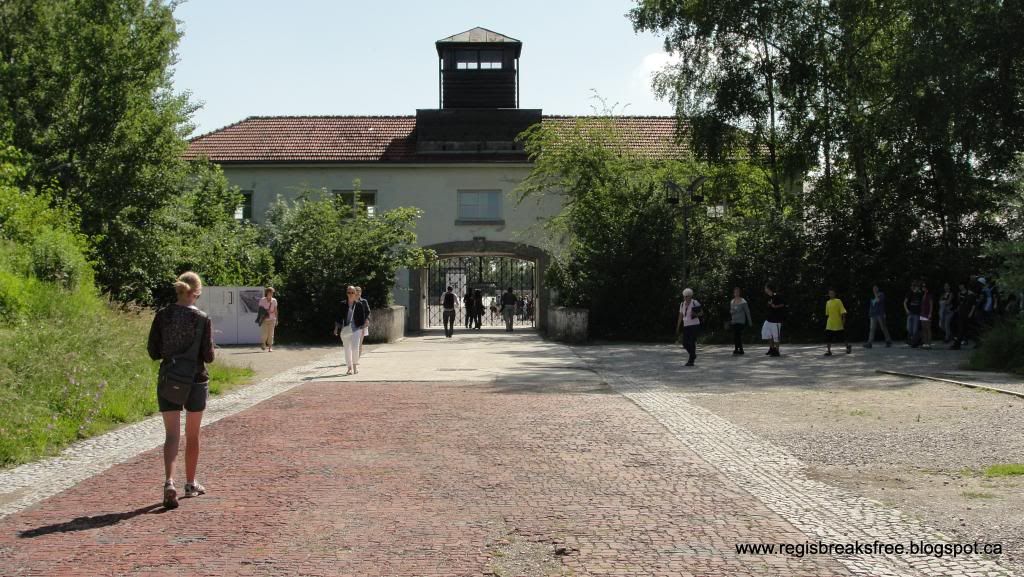
In fact the entire camp was hardly 10 minutes walk from the town of Dachau.
Walking up to the front gates.
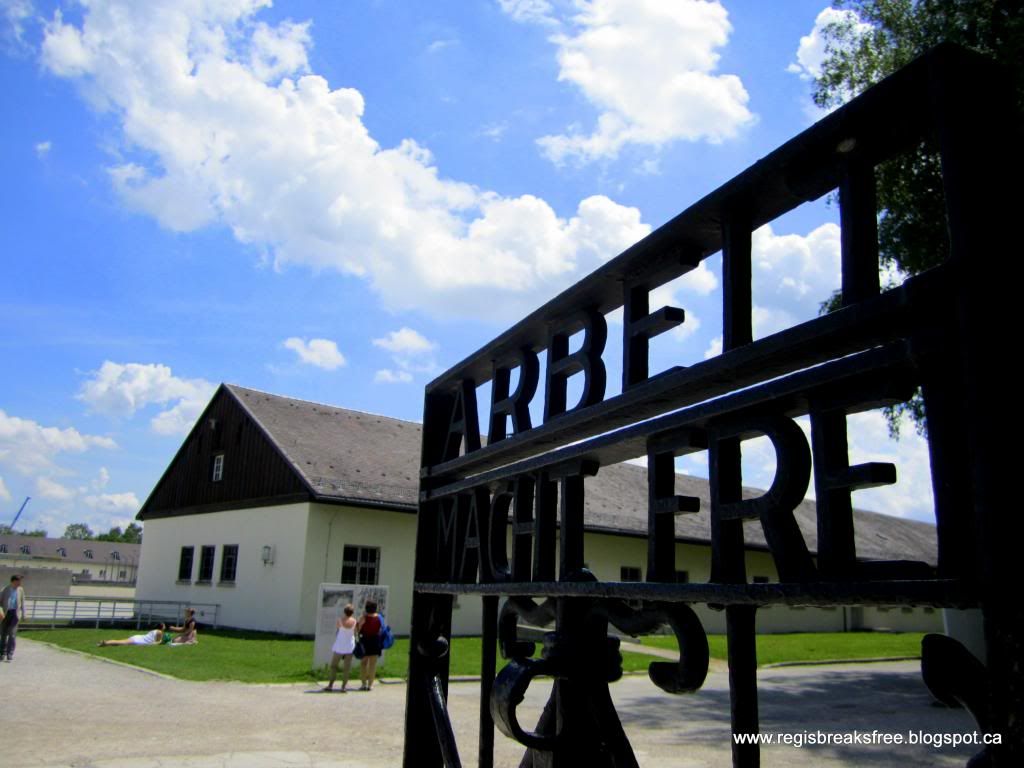
"Arbeit macht frei" 
Wrought into the front gates are the German words, "Arbeit macht frei", which mean "work will make you free", which was the propaganda for the labour and "re-education" camps. Every prisoner who came into Dachau, entered through these gates.


Their details were recorded, they were made to give up their valuables and to undress completely, their heads were shaved, and then they were disinfected, showered, and given a uniform with a different colored badge being awarded for every different "crime" (ie: being Jewish, a priest, a political prisoner, homosexual, etc).
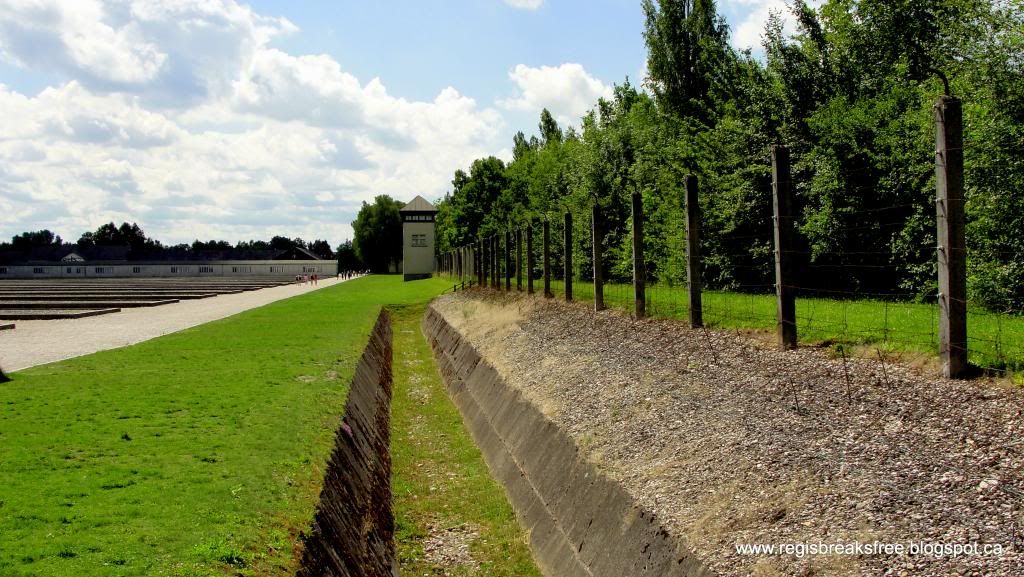
The ditch and electrified barbed wire fence made escape almost impossible, even if it weren't for the armed guards.
To the left you can see the outlines of where the barracks used to be.
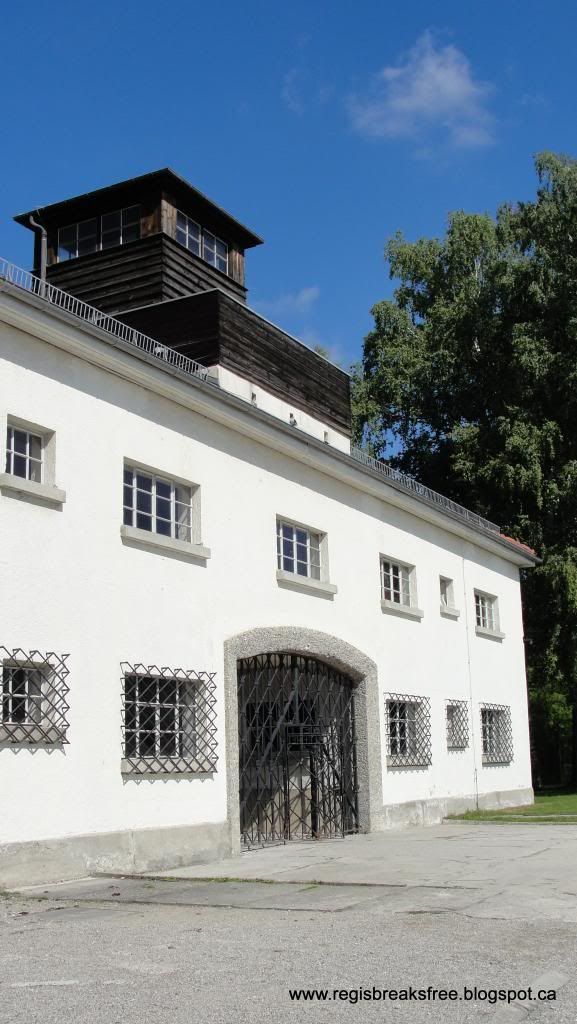
Prisoners were registered at the gatehouse. All the perimeters were patrolled by armed guards, and anyone trying to escape was shot on sight. Many prisoners intentionally threw themselves into the ditch or the barbed wire, choosing suicide over continuing to live inside the work camp
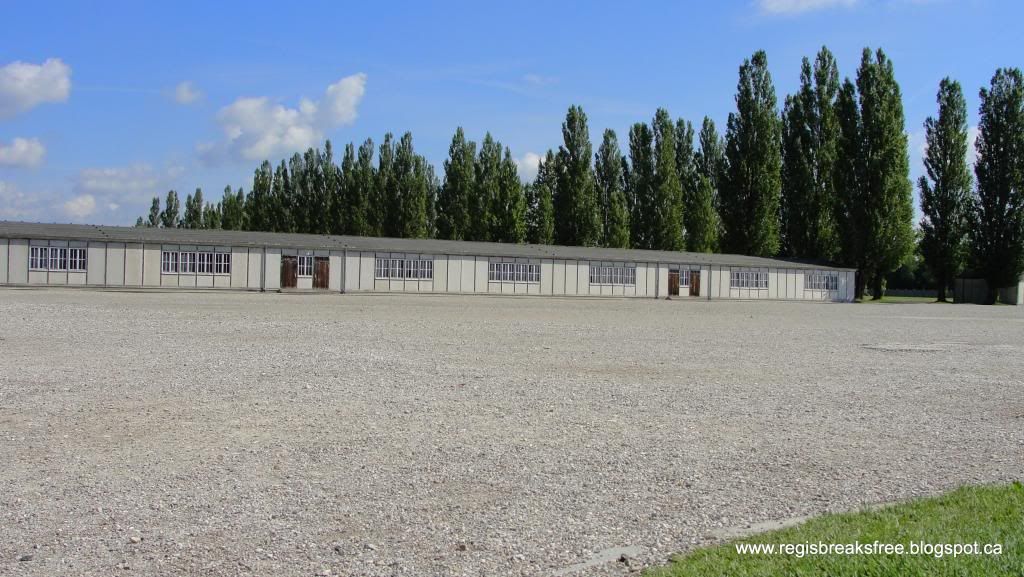
Prisoners barracks, and the "courtyard"
The courtyard was a prominent feature in the prisoners' life. Roll call was taken every day, and though it took hours, they were forced to stand there in all types of weather. This was also where the public executions took place. The original 34 barracks were destroyed after the war, but a model has been constructed to allow visitors to envision what it would have looked like.

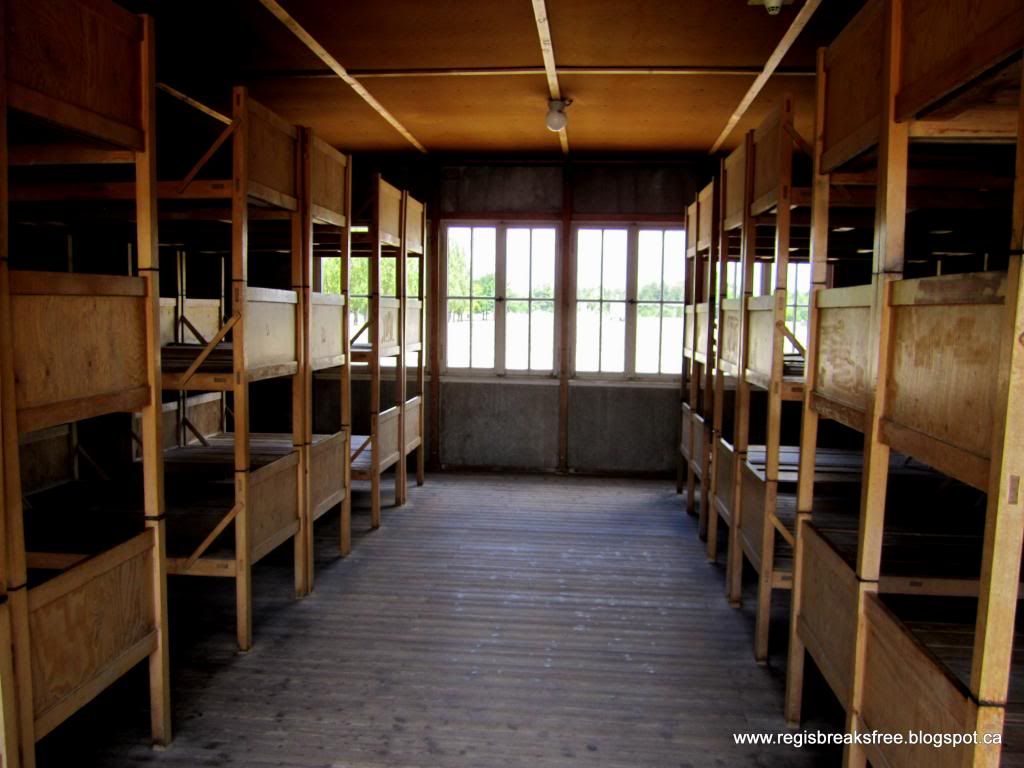
Bunks inside the barracks.
As time went by, the barracks were packed well beyond their original capacity. Needless to say, conditions inside the barracks were atrocious. The camp was designed to hold 6,000 prisoners, but when the Americans liberated Dachau at the end of the war, there were over 30,000 prisoners inside. That doesn't include the many that had been recently executed, or died from starvation, disease, or exposure.


The building that used to have the kitchen, laundry, and showering facilities now serves as a museum. There is a lot of memorabilia and information. There are tour guides that will walk groups through which are great. I eavesdropped for a couple minutes on a group nearby, and then the guide yelled at me. So...no, they are not free :)
It was extremely interesting, but after a couple hours, it really becomes too much to take in...I felt drained afterward. It is very depressing.
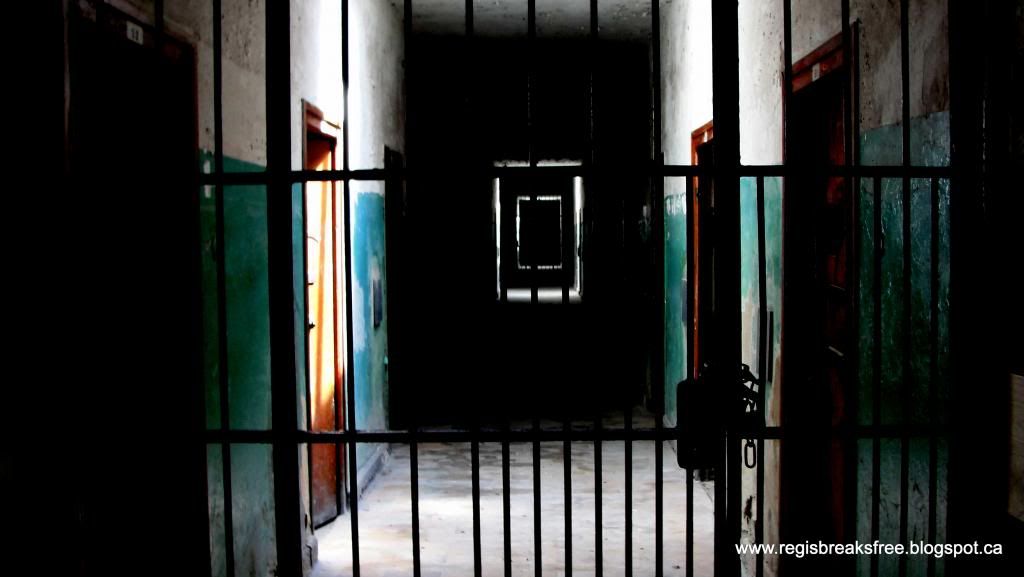
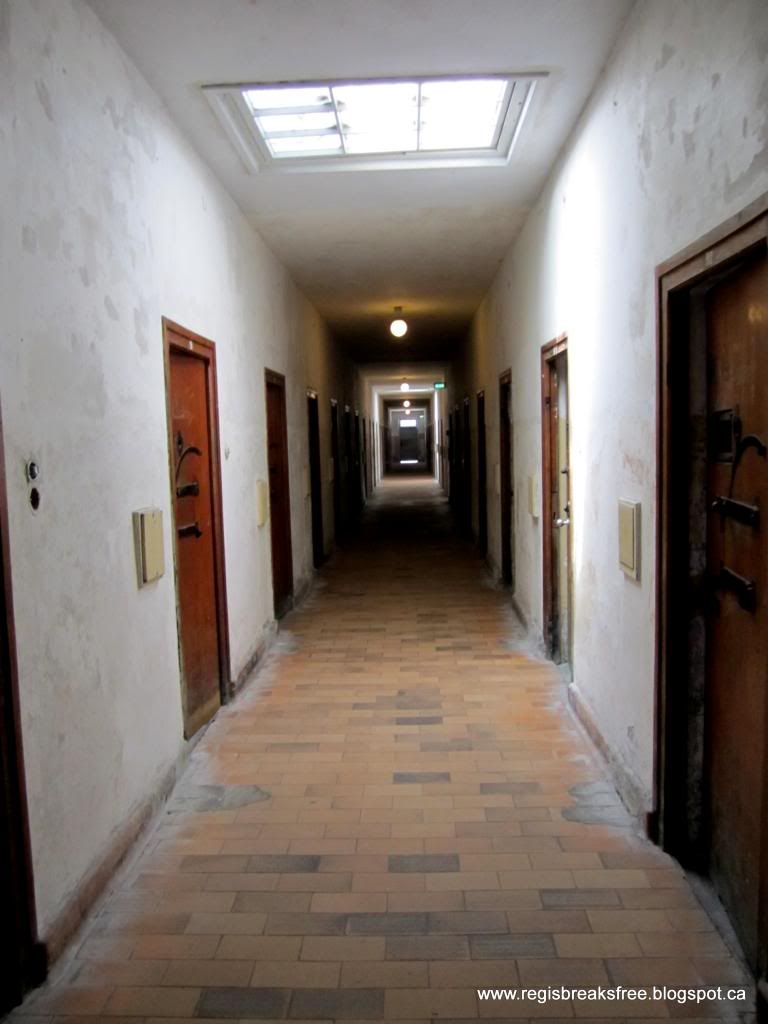
Cells.
Behind the kitchen building, cut off from the rest of the camp, was the "bunker", which for all intents and purposes served as a jail. I was actually shocked that a concentration camp needed a jail, it seemed bad enough already. But worse things happened here. Rebellious and defiant prisoners were sent here, and often did not leave alive. I won't go into a lot of detail, but this is where prisoners were sent for solitary confinement, torture, beatings, and the infamous standing cells.


It is a very unpleasant place, and it gave me the creeps.
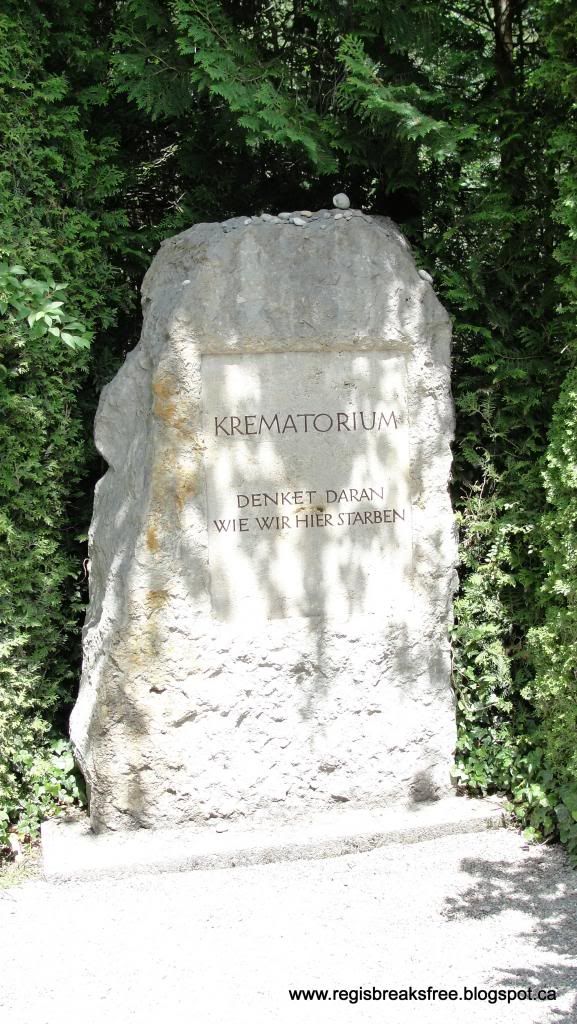

At the very end of my visit, I reached the crematorium. I almost didn't go in, because it is a really horrifying place. Ok, so the building is just a building. But terrible things happened there, and I felt sick just thinking about it.
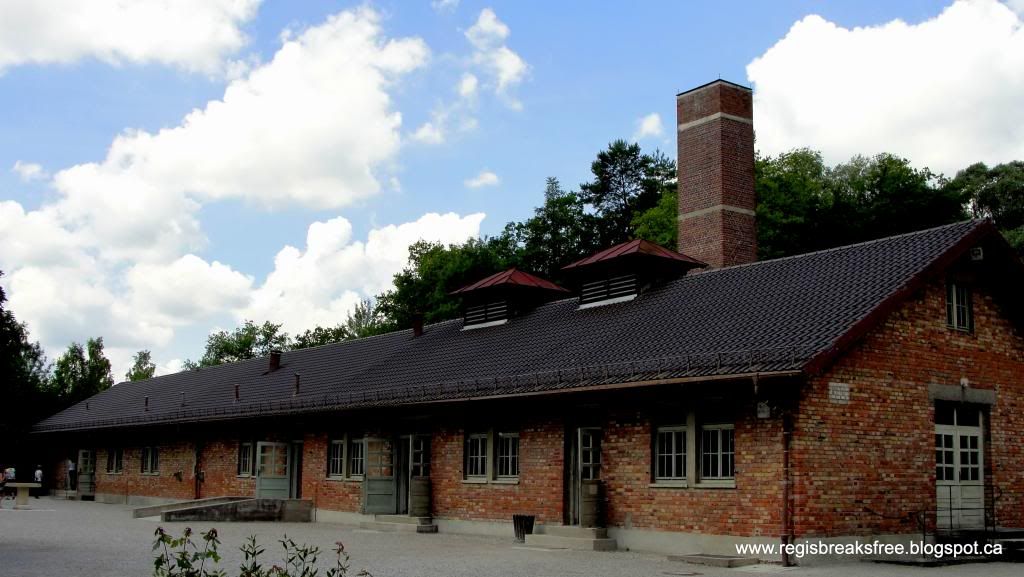
The crematorium. 
I didn't take any photos once inside, because it felt disrespectful somehow. Walking through and reading the descriptions of what each room was used for, and the process used to execute countless prisoners was extremely emotional. Actually, writing this post and looking up details I had forgotten about the camp has been a bit depressing. It is that much harder when you are actually standing there knowing what happened in that exact spot.

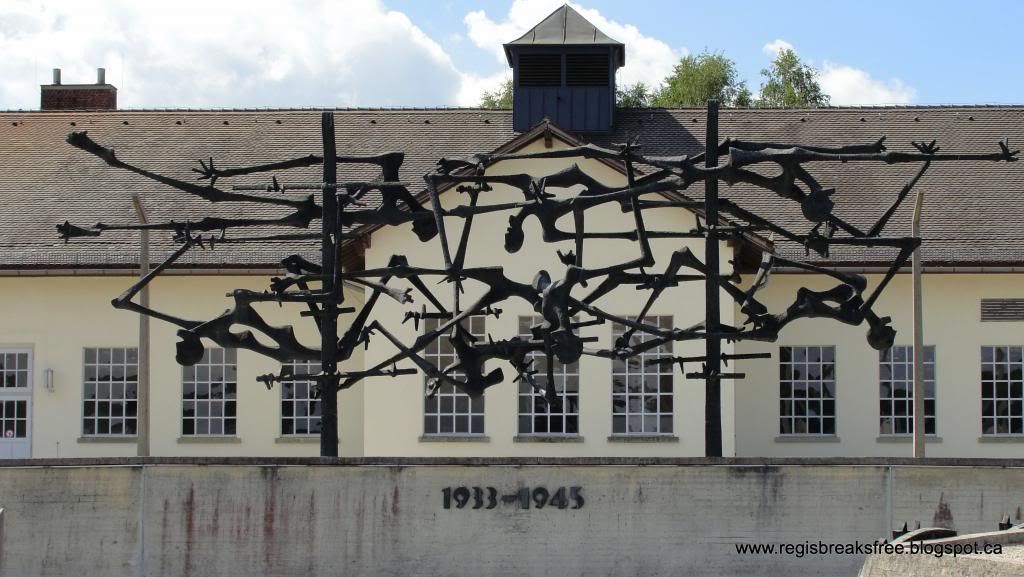
"Never Again" The International Memorial
Having said that, I highly recommend visiting the Dachau Concentration Camp Memorial Site. It is kept up very well, the museum is full of in-depth information, the staff are wonderful, and the bistro is a nice place to grab a bite to eat when you need some downtime from all the emotional upheaval.

It is a great place for some reflection on the past, and to pay respects to the thousands of innocents that died there, and in places like it. It is terrible to realize what humanity is capable of doing to its own kind. As I study Social Psychology in university this semester, it becomes clear that this is not an isolated phenomenon, but something that could happen anywhere to anyone, if there is enough fear and power at work. Dachau becomes a warning and a lesson against blind obedience to authority and pluralistic ignorance as a society.
I hope it is a lesson that will never have to be relearned. 

Thursday, 24 November 2011

Lucca

When planning my trip, I sent out a few Facebook messages to a couple friends who had been traveling before, asking for trips and recommendations. One friend who had been all across Italy told me her favorite place had been the small town of Lucca, which is about an hour's train ride West of Florence. Our travel guidebook also gave high praise on account of its beauty and charm. I was sold, and convinced Brit to go along with me.
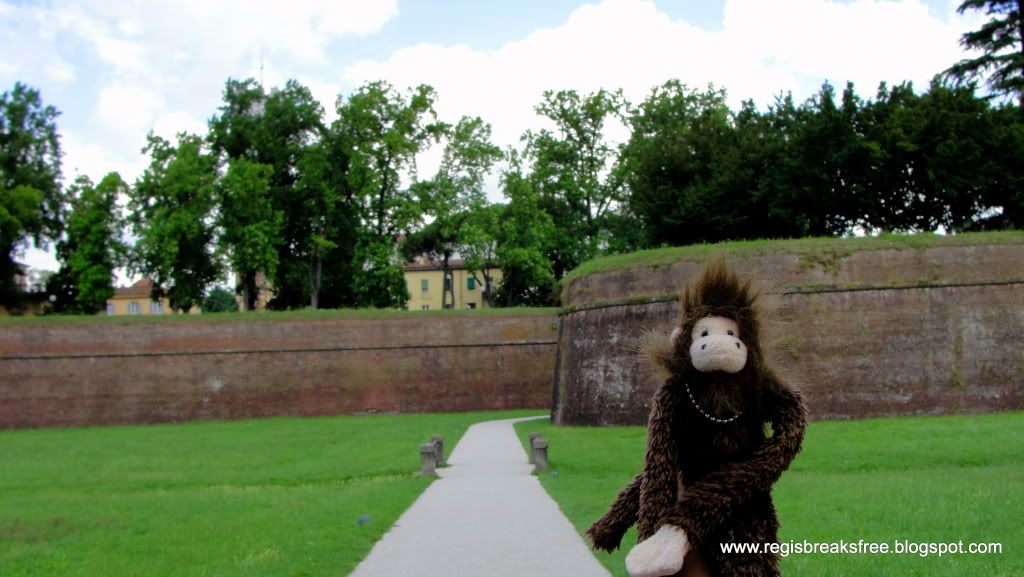
Regis welcomes you to the city of Lucca
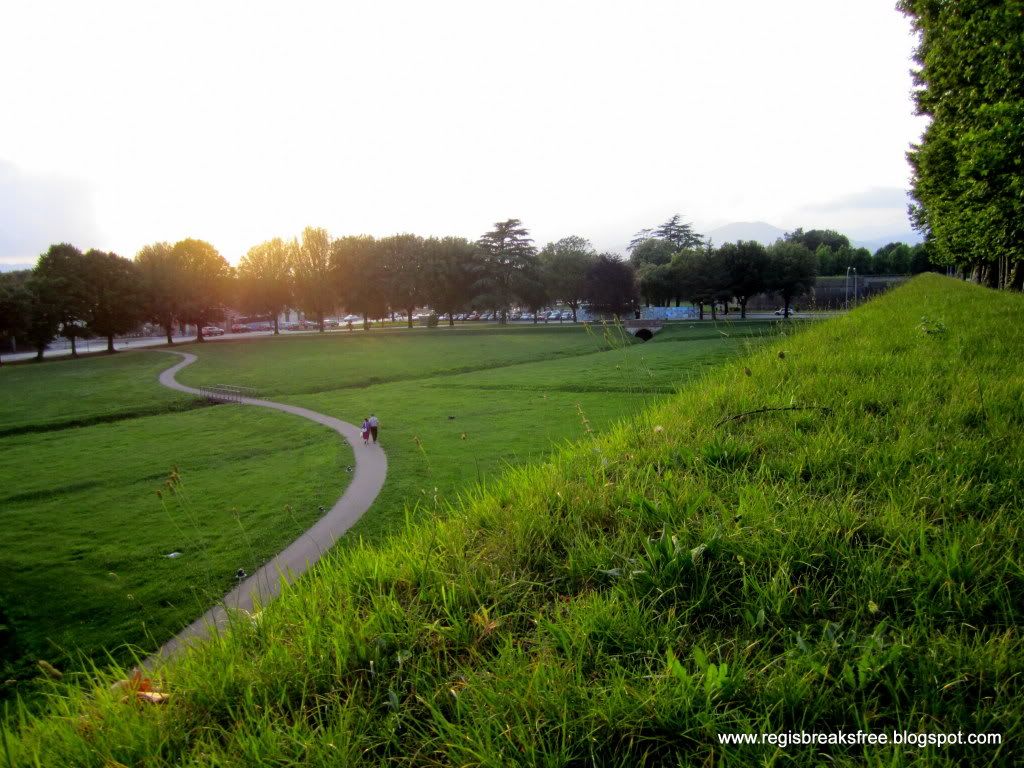
Lucca is most well known for the wall that surrounds the entire city center. It was built during WWII in the event of an attack....which never came to this specific location. The result is a beautiful wall in perfect condition! It now acts as a huge raised park around the town. Lush green grass, tall trees, and a lovely bike path are main features, and a big tourist attraction.

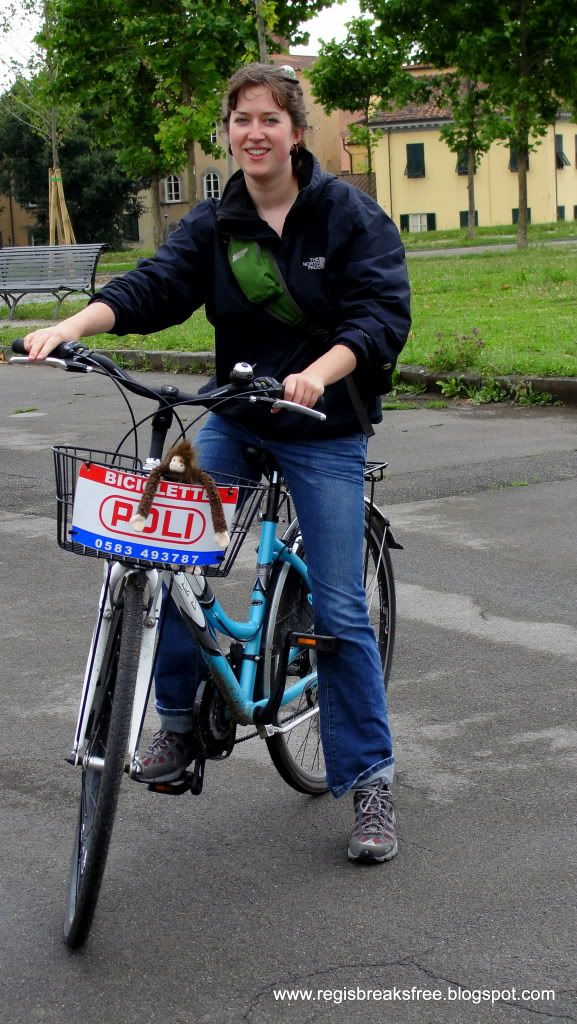
Taking the little monkey out for a spin. 
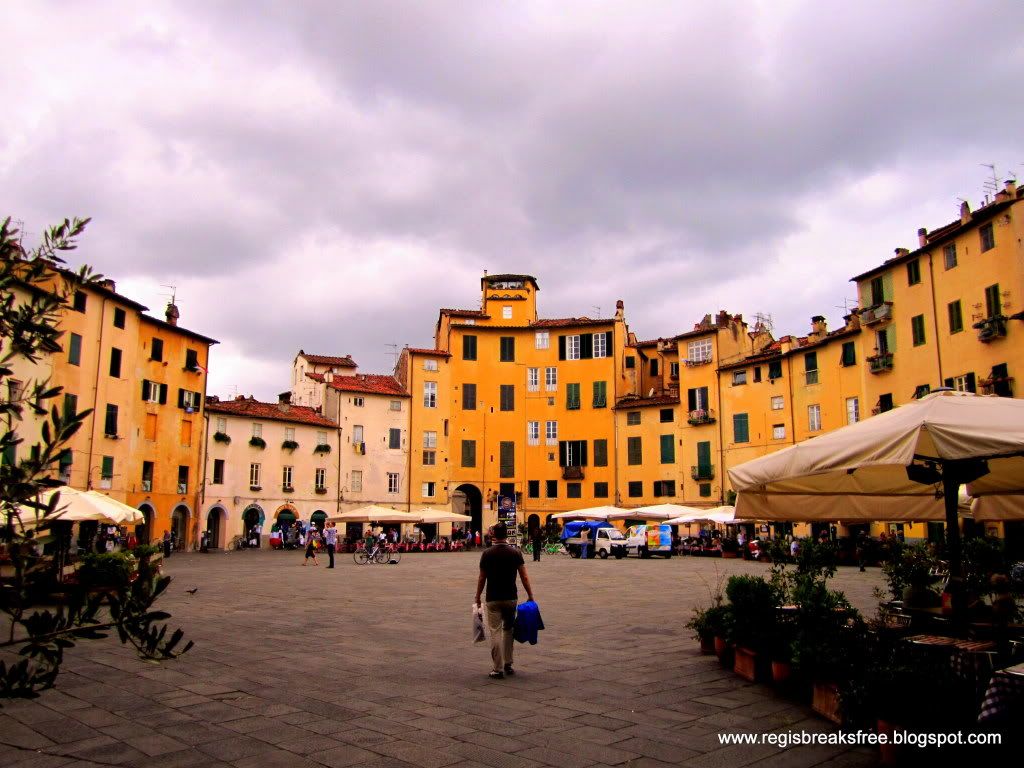
The walls of Lucca are sort of an oval shape, so the city inside ends up sort of layered, like an onion. In the heart of the town is the amphitheater; a reminder that this was once a Roman settlement. There are no togas here now...just a lot of restaurants and tourist trinket shops. I ate some risotto and bought my tacky "I ♥ Lucca" t-shirt there...really only because I didn't pack enough tops though, I promise!

You might recognize this place if you've been watching the food network lately...
specifically the  Filippo Berio olive oil commercials!
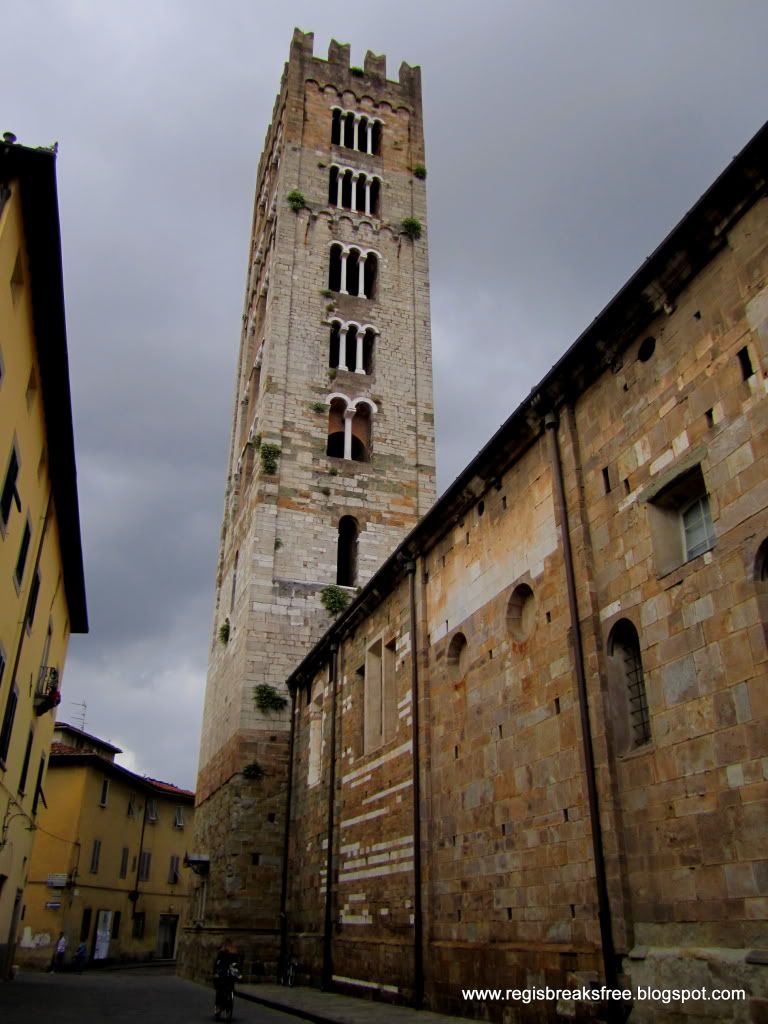
While there isn't a lot to do in Lucca, per se, there is plenty to see. The little town is a great place to get lost in. Those twisty roads that don't make any sense are very tempting...you always want to see where they are going to come out. And just when you think you have it figured, you end up somewhere new!


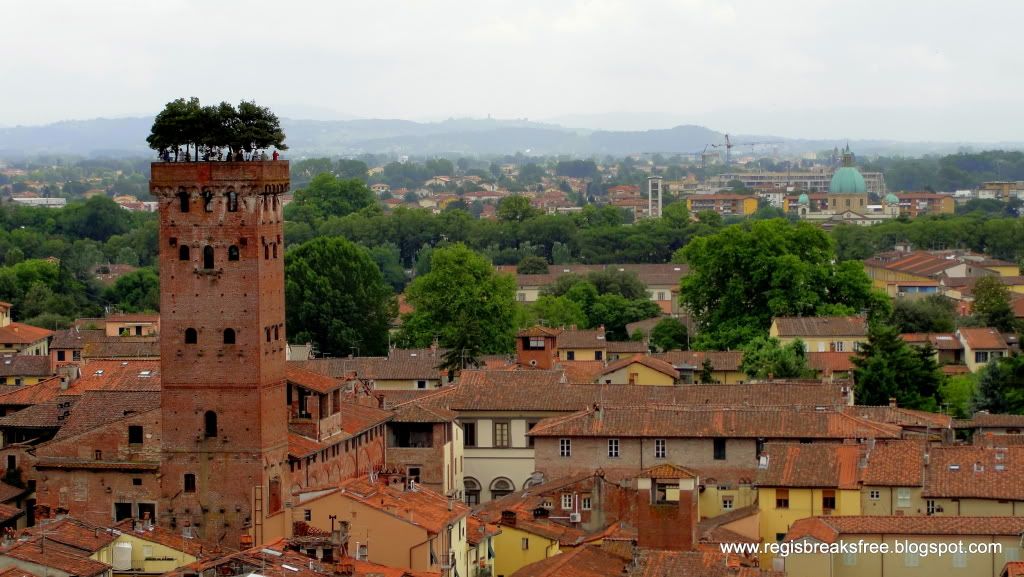
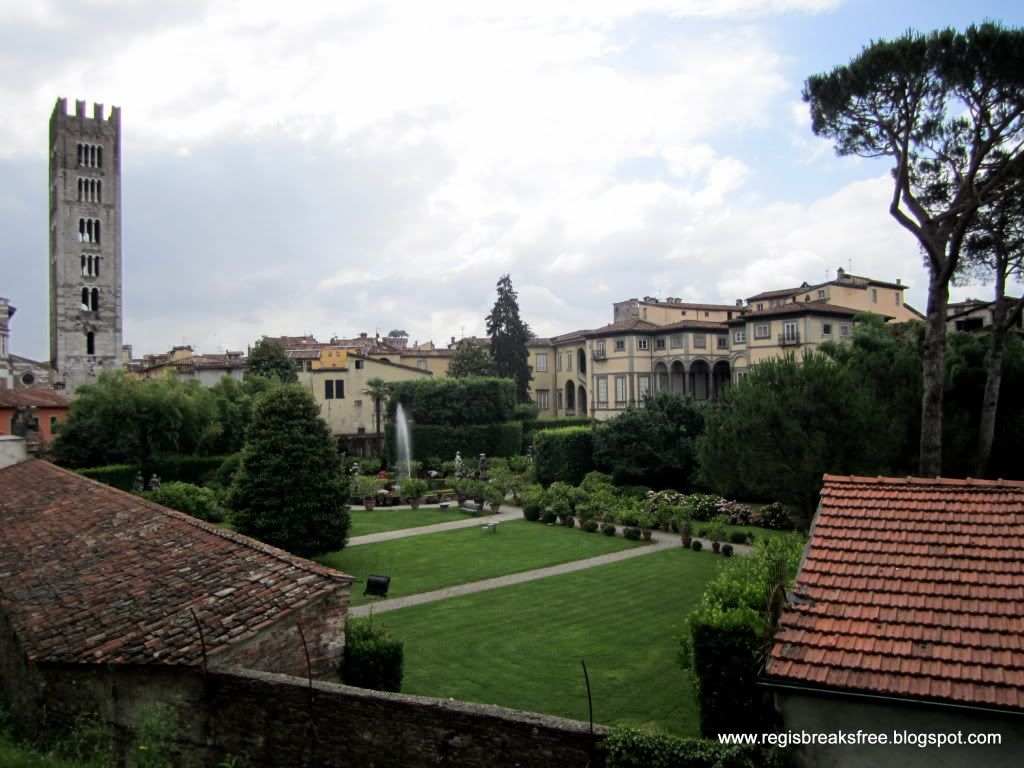
It is also incredibly scenic. We took pictures of everything! From markets, to street lamps, to the views from the wall, and of the wall!

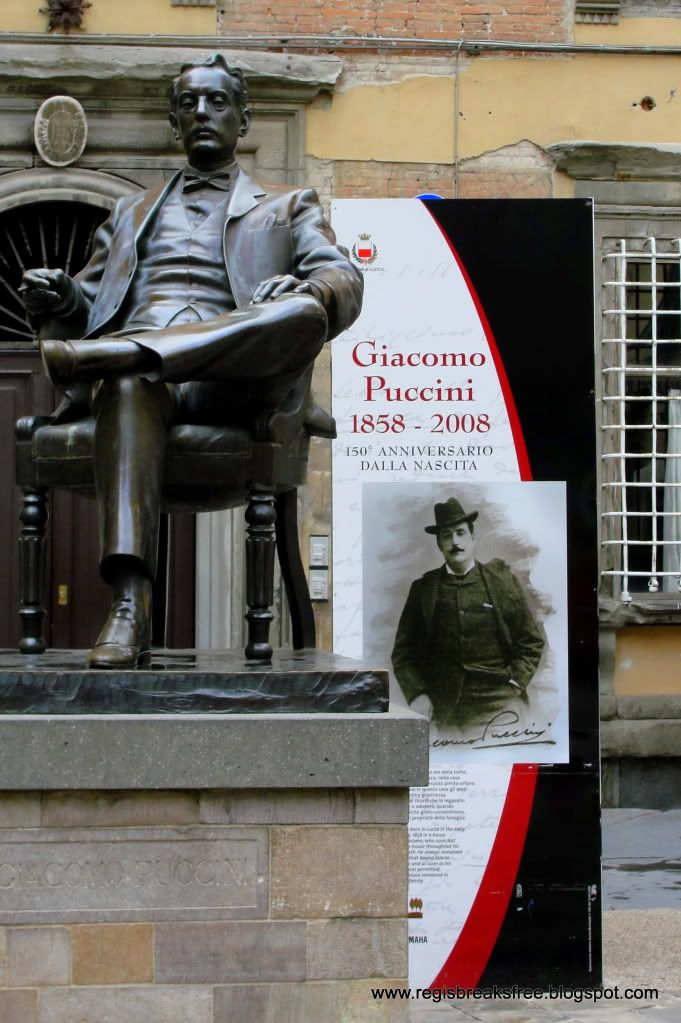
To those who are RENT fans, Lucca is the hometown of Puccini. I know nothing about the musical or the music that inspired it, other than I heard some beautiful opera in a store that was all about this guy.

Another tourist draw.
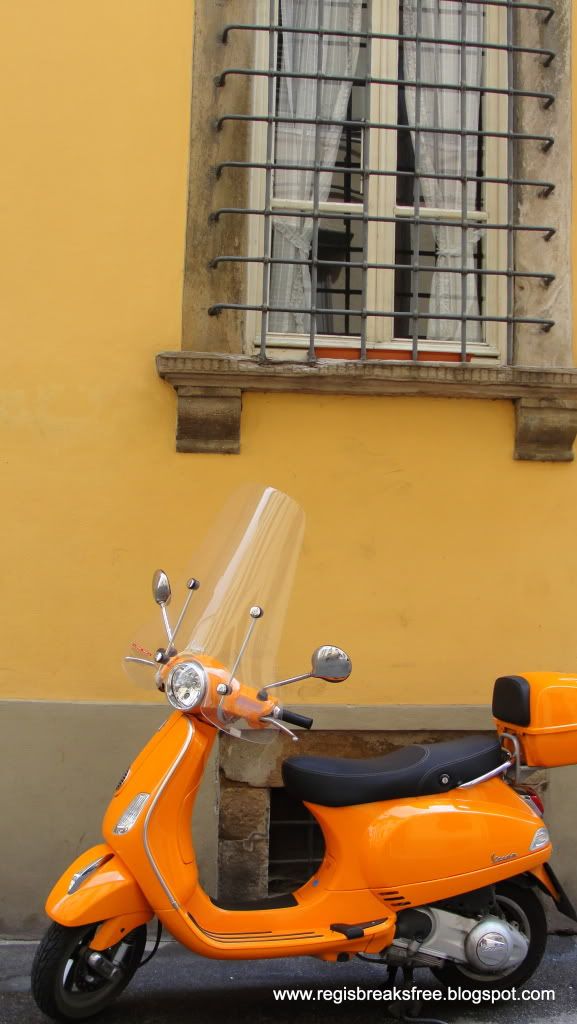
There were very few cars within the walled part of the city, as the cobblestone roads were quite narrow, and it is such a small town that it is more convenient to travel on foot, by bike, or one of these...

I've vowed to myself that someday I will own a Vespa.
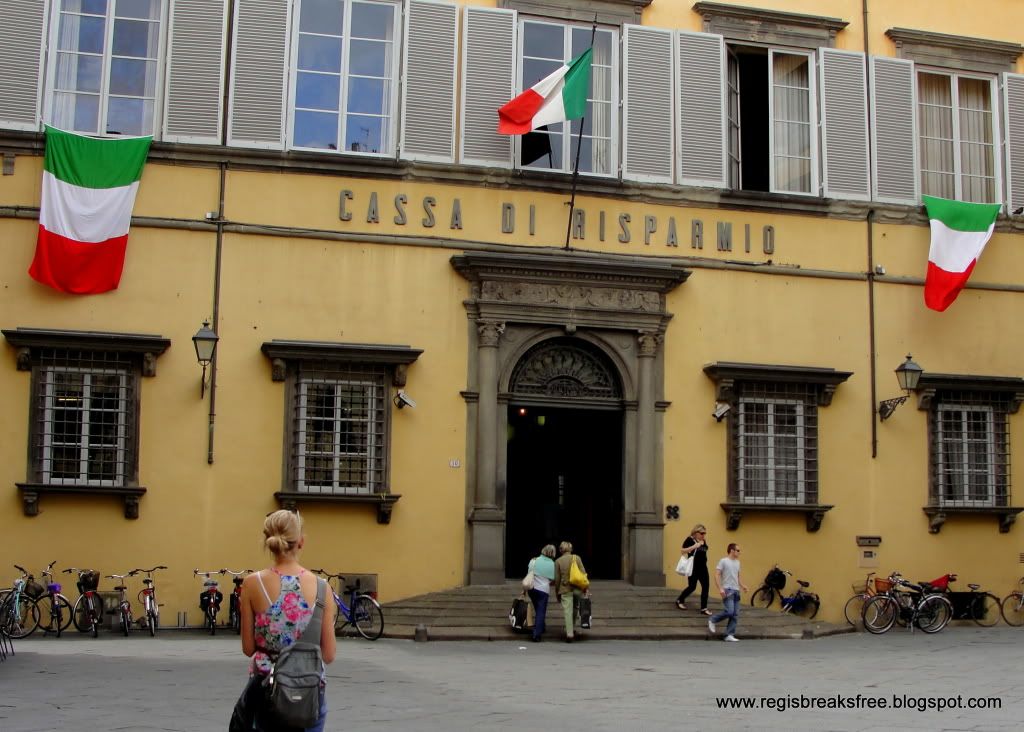
While there are obviously a lot of tourists staying in the city, I got the feeling most of them were still Italian! Lucca had a very laid-back, vacation-y sort of feel, as opposed to the bustling souvenir-buying, landmark-ogling, camera-toting (that's me!) feel of Florence. Since there's no real big attractions, most people skip this place for somewhere like Rome. I'm glad we didn't. 


The downside of it being a holiday-er destination was that eating out was quite pricey, and not necessarily any good. The aforementioned risotto was forgettable, and I had a terribly disappointing and expensive tiramisu (I saw the server defrost it in the mircrowave!!! I'm still not over it.). That being said, there are some mean gelaterias around, like Geleteria Veneta, where you can also get decent panna cotta or tirimisu for 2.50 EURO. That, and their coffee is good, and cheap! 1.00 EURO takeaway, or 1.50 EURO to stay in.


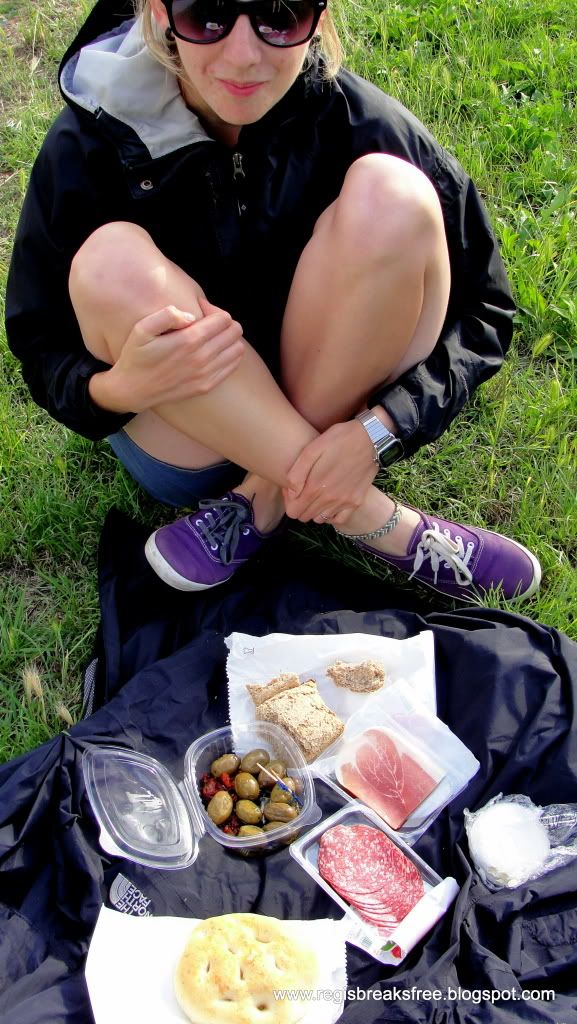
Our favorite meal in Lucca was our own little picnic on the wall, hands down. Tired of spending money on overpriced pizza and pasta, we decided to go shopping for our own antipasti.
We wandered down via Croce, and bought some deli meats, cheeses, olives, pesto, bread, and sundried tomatoes for a delicious feast.
The ultimate in budget travel meals!
It was soooooo delicious! I even tried the olives, and liked them. Some things can only happen in Italy. 

We loved Lucca so much we even cancelled our reservations for our first night in Venice so that we could stay longer! There is still so much more I could write about it, but I'll have to do that another time...

Or you could just go there yourself...which I highly recommend :) 

Saturday, 30 July 2011

Haarlem History

The city of Haarlem was conveniently located only 10 minutes by train from my Great Aunt's house, and I had wanted to visit it ever since I had read, "The Hiding Place" by Corrie Ten Boom.
If you have never read or heard of this story, well...you should read the book. But basically it is the true story of a Dutch woman in her forties who helped Jews in Haarlem during World War II. It is a pretty incredible little book, and I knew I wanted to check out the Corrie Ten Boom Museum which is located in the original house.
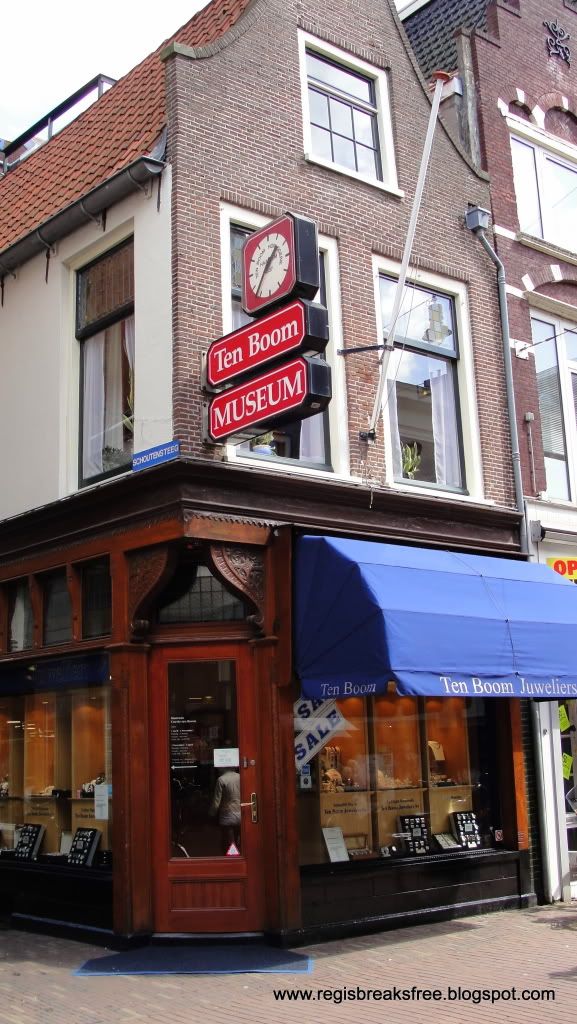
The store is still running
It didn't take us long to get there from the train station. The front shop still operates as the "Ten Boom Jewelers" watch and jewelry store, and the museum can be found tucked a little ways down the side alley, where the Ten Booms lived. We arrived about a half hour early for the tour in English, which was perfect!
My friend Brittany had not read the book, and didn't know the story, so it was cool to get her reaction to it.
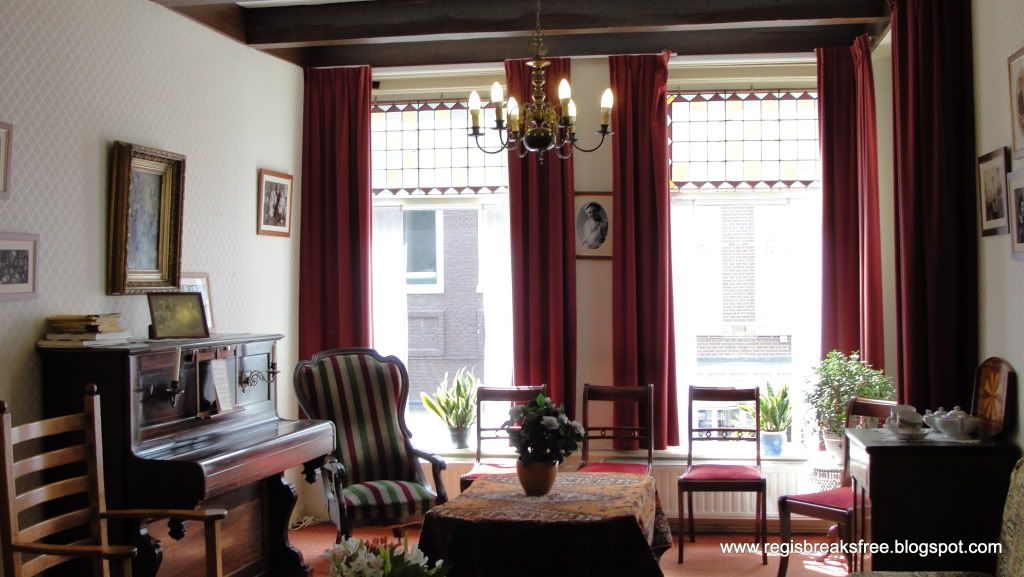
The house was decorated and arranged to look like it would have during the war years, and there were lots of pictures of the family and characters from the book on the wall.
The Ten Booms' living room
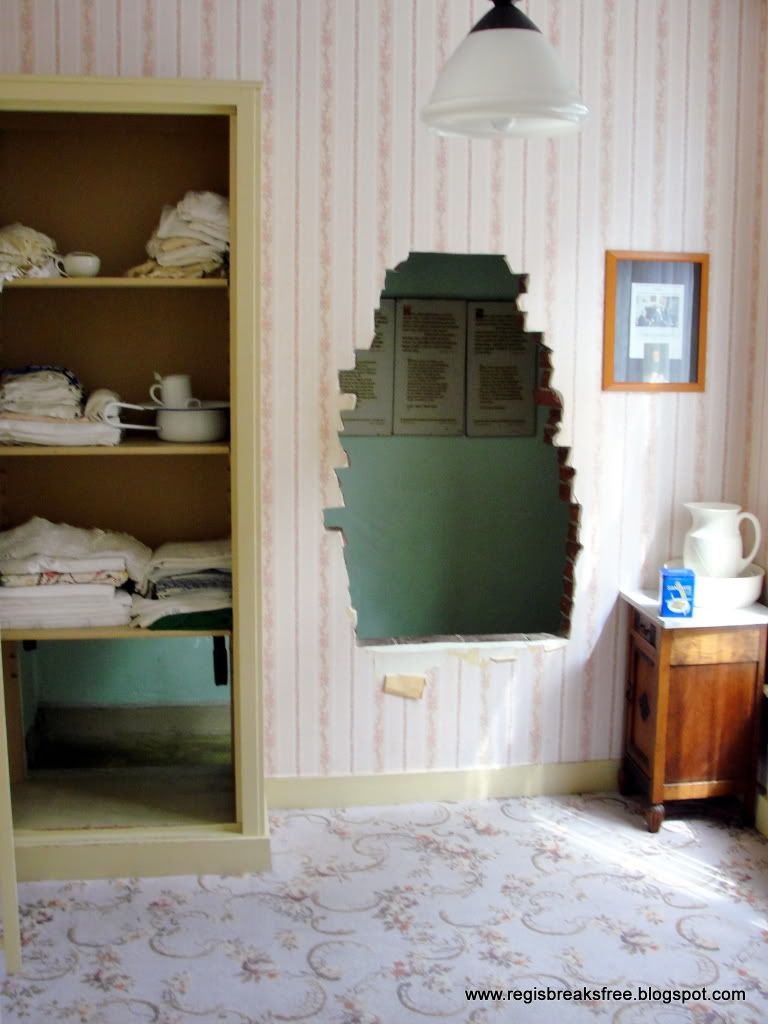
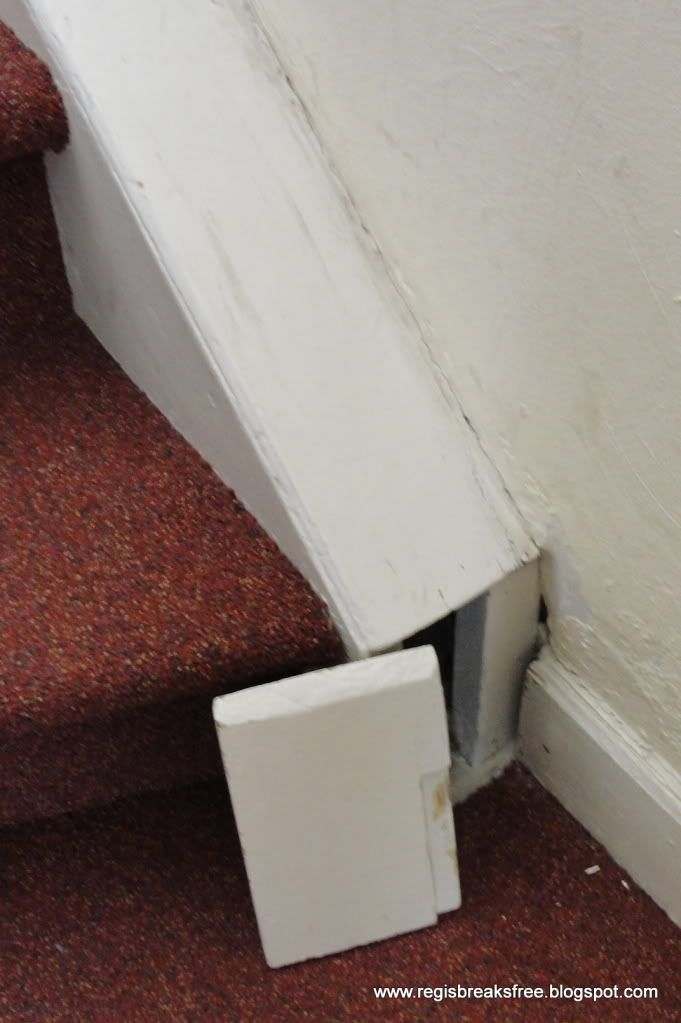
Our guide (who worked on a volunteer basis) was wonderful...very friendly and passionate about the story. She explained about how the Ten Boom household always had their door open to those in need, how they were involved in the Resistance, and how they carefully built the hiding place into Corrie's (already tiny) room by constructing a brick wall, and a sliding panel behind the closet...all seamlessly done. You literally could not tell that it was not original...apart from the fact that they took out the gap for interested tourists like myself!
The false wall.
The tour took maybe an hour, but it was very interesting and, in keeping with Corrie's generous ways, it is free (though you can make a donation, there is absolutely no pressure to do so). There is also a bookstore, selling Corrie's writings in many different languages, and a few other Hiding Place related things. Definitely worth a visit!
The Ten Booms hid ration cards and false identity papers in the sideboards.
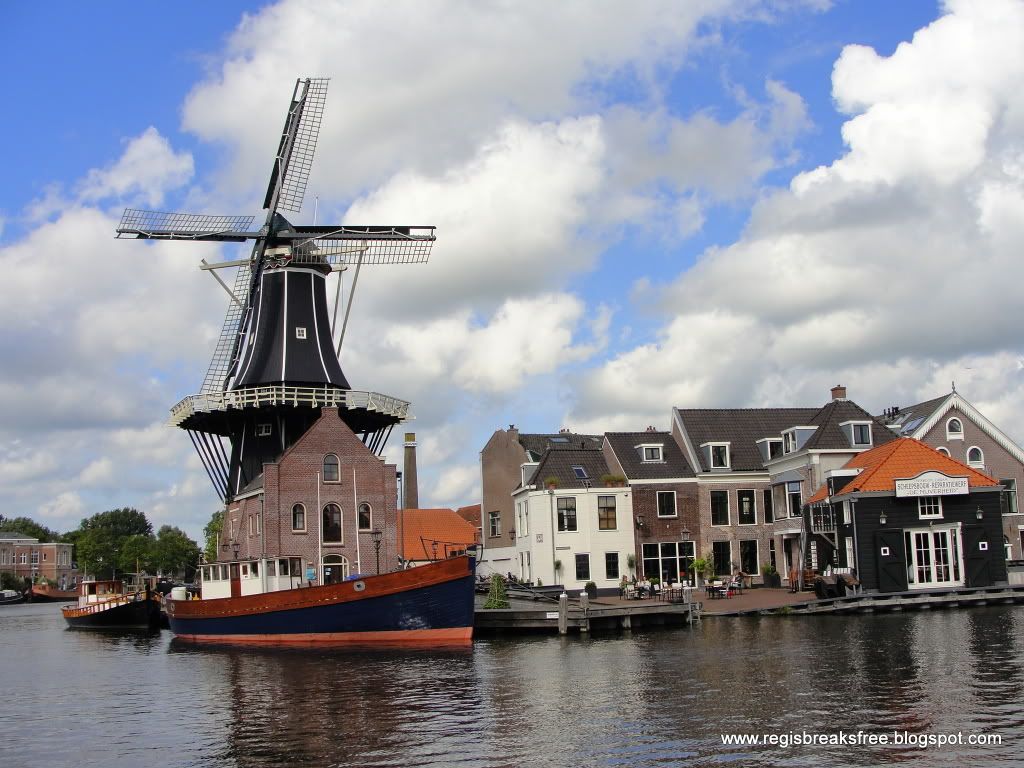
After that we explored a little bit more of Haarlem, and I really loved it. While its only a short train ride from Amsterdam, it feels 100% more authentically Dutch, and sooo much less touristed! We literally felt like the only tourists in the city (that is a good thing).

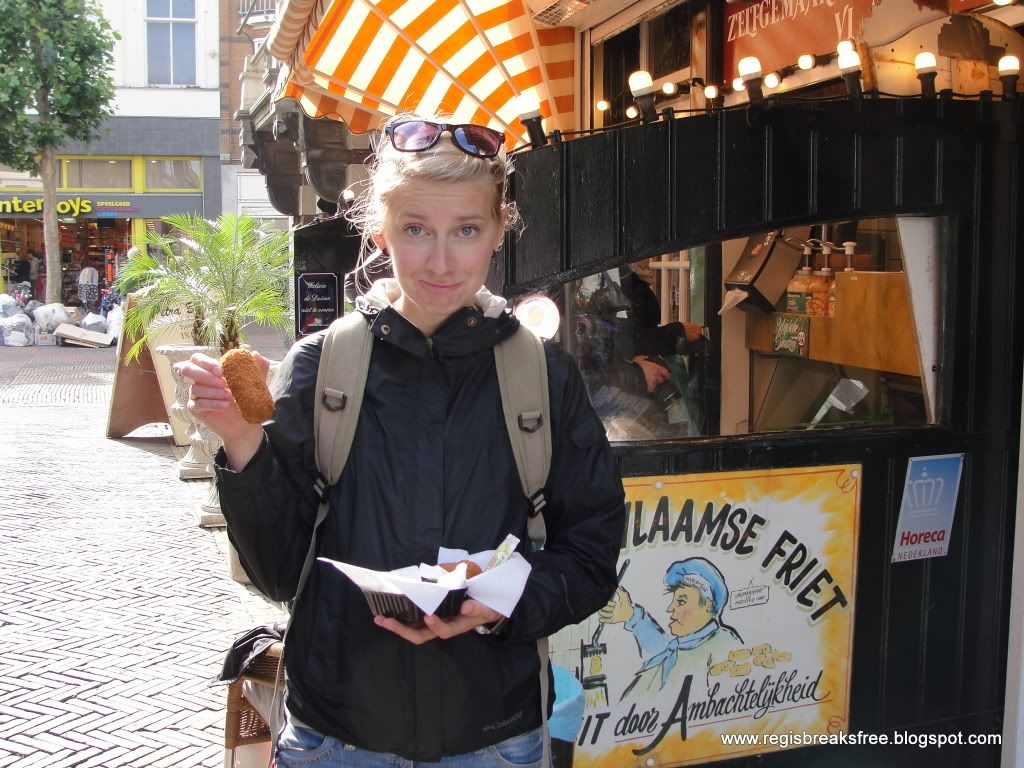
We even found a delicious fast food stand that sold krokets: a delicious Dutch delicacy, consisting of a thick stew-like filling, breaded and deep-friend to perfection. Brit said she liked them, and I ate....3....yes, I did. They were so good (but not as good as my mom's!).

I think I could live in Haarlem.

Wednesday, 15 June 2011

Munich

My second trip on a night train wasn't too bad. Turns out ear plugs make all the difference! We arrived at 6:30am this morning and grabbed breakfast at the stations Starbucks. We couldn't check into our rooms that early but luckily the hotel let us leave our bags there and we caught the next train to dachau.
We knew going in that a visit to the concentration camp memorial site wouldn't be exactly an uplifting experience...it was actually pretty emotionally draining. We spent probably close to 5 hours there and I feel like I skipped a lot of it. The property is massive and actually very beautiful. It felt wrong that as we walked up the gravel road it was a bright sunny day and the birds were singing. Hard to believe that so many terrible things happened right there not that long ago.
The hardest part for me was walking through the crematorium and seeing so many horrific images of the bodies that had been just left in heaps there. It got quite emotional.
The site was kept up really well, and there was plenty of information to be had. Too much for one day, I think. Worth a visit for sure though.
Despite this dark andmorbid history, Munich is really awesome and Brit and I are both loving it! It's a very cool city.